Is NVIDIA's Free LLM API Worth It? 40 RPM and Three Catches
NVIDIA hosts 80 models free, but a terms review found a ~40 RPM ceiling, two 'not in production' clauses and models that vanish without notice.
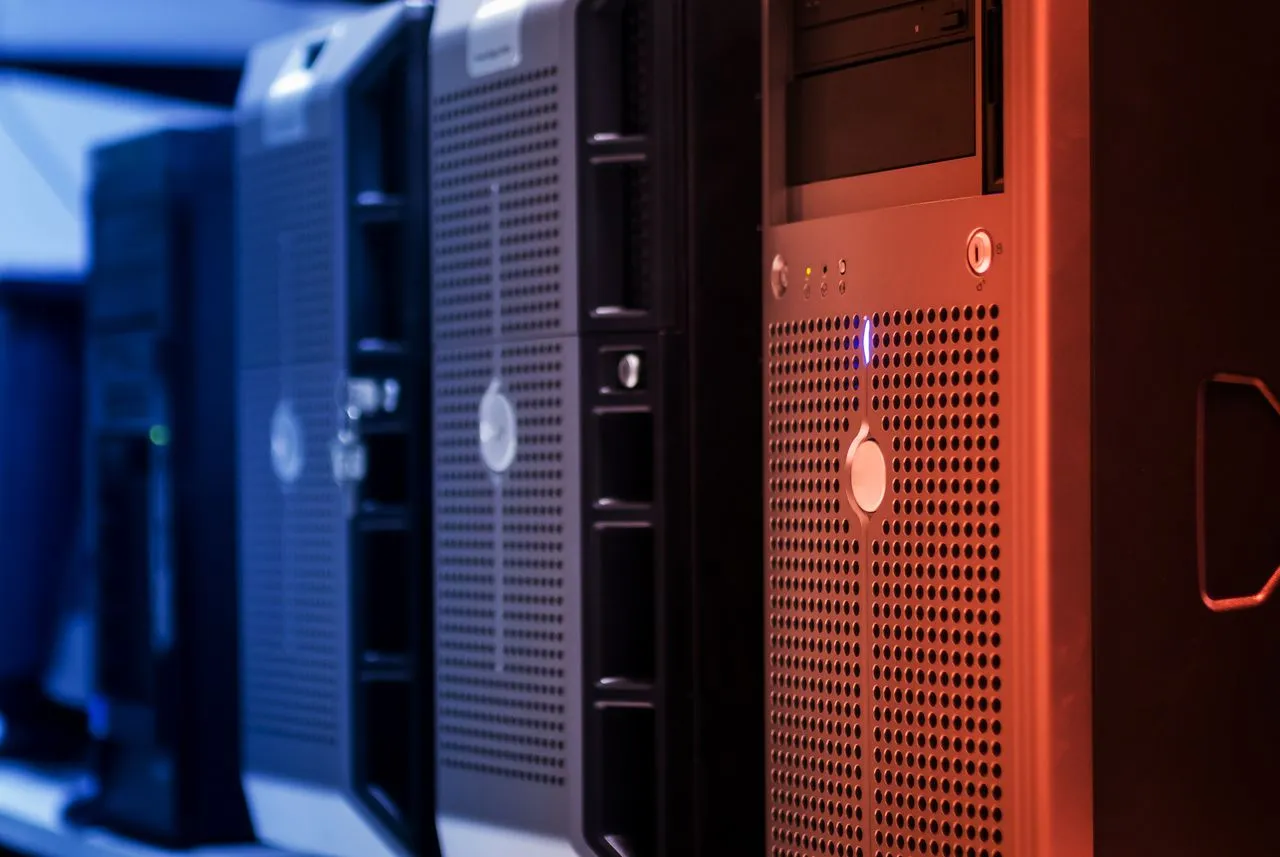
NVIDIA's free endpoint listed 80 models on 15 October 2026. A clause-by-clause review of its trial terms, published the same day, found a roughly 40-requests-per-minute ceiling and two separate "not in production" clauses.
That matters because the tier has been promoted for months as a replacement for a $20-a-month chat subscription. It is a different product, and its limits decide whether it fits your project before you write a line of code.
What the endpoint actually gives you
NVIDIA Build is the catalog; NIM, or NVIDIA Inference Microservices, is the packaging — a model in a container tuned for NVIDIA hardware and sold to enterprises. The hosted versions of those containers are what you call for free, at https://integrate.api.nvidia.com/v1, with a wire format identical to OpenAI chat completions. Access runs through the NVIDIA Developer Program, which is also free, and no card is required.
The counts in circulation range from 80 to 160. Querying /v1/models on 15 October 2026 returned 80 ids. Of those, the review counts 16 as current-generation chat or reasoning models and 32 as NVIDIA's own, including Nemotron 3 Ultra and Super alongside safety classifiers, embedders and a 340B reward model. The remaining 26 are general chat models from 2023 to 2025 — Llama 2 70B, Mixtral 8x22B, Yi Large, DBRX.
The quality beats that spread. Against the Artificial Analysis open-weights index, six of the eleven highest-ranked open-weight models are on the endpoint for nothing. GLM-5.3 ranks second overall and costs about $0.90 per million output tokens elsewhere; DeepSeek V4.1 Flash about $0.20. Vendor-reported scores put Kimi K3 at 93.5 on GPQA Diamond and 76.8 on SWE-bench Verified — the labs' own numbers, not independent measurements. NVIDIA's Nemotron 3 Ultra sits tenth of eleven on that index, so the company is hosting rivals that outrank it.
Catch 1: about 40 requests a minute, with no way up
NVIDIA does not publish the limit. The ~40 RPM per key, shared across all models, is community-derived. Staff confirmed on the developer forum in September 2025 that the old credit system "has been replaced by rate limits for trial usage," that limits "vary by model and are not published," and that a signed-in user can see their ceiling on build.nvidia.com.
Forty a minute is ample for one chat window and nothing for an agent. The forum carries at least seven threads asking to go from 40 to 200 RPM, nearly all from developers pointing coding agents — OpenCode, Cline, Claude Code — at the endpoint; one describes 429s "repeatedly blocking agent workflows" even with exponential backoff. The moderator reply quoted across those threads: "There is no official way to circumvent this rate limit or to receive a rate limit increase on that same tier." The recommended path for more throughput is to pay and deploy through NIM.
Catch 2: "not in production," twice, and a data clause that cuts the other way
The October 2025 revision of the API Trial Terms of Service restricts production use in two places. Clause 1.2 grants access "for limited trial purposes only and without use of the API Service or Generated Content in production." Clause 1.4 repeats it: "you may only use the API Service for internal testing and evaluation purposes, not in production." Staff defined trial use as "prototyping, research, development, testing, or learning," and said "the trial period is not limited by a time period" — so a side project can run indefinitely, right up until it has users.
On data, two clauses sit awkwardly together. Clause 2.3 says NVIDIA "will not store or use User Content or Generated Content at the end of each API Service session," but opens with an exception pointing at Section 2.4, and clause 3.3(iv) says NVIDIA collects, "without identifying specific users," your "User Content and Generated Content to improve NVIDIA products and services, including AI models." The reviewer's reading — an inference, not an NVIDIA statement — is that anything you send may end up in a training set.
Two more clauses target developers. Clause 4.10 bars security testing of the service, including any attempt to "probe, scan, or vulnerability test." Clause 4.12 bars using the service, "including Generated Content to develop or improve products or services that compete with the API Service" — worth a lawyer's eye if the plan involved distilling outputs. Clause 6.3 confirms you own the outputs, subject to each model's licence: GLM and DeepSeek are MIT, Nemotron sits under the NVIDIA Open Model License.
Catch 3: models disappear without notice
The post that kicked off the free-tier wave was published 14 June 2026 and named MiniMax, Kimi, DeepSeek, GLM and GPT-OSS. Four months later MiniMax is gone, GPT-OSS-120B is gone with only the 20B left, and DeepSeek V4 Pro and the original V4 Flash were deprecated on 7 August 2026 with no advance notice. Clause 1.3 reserves that right: NVIDIA "may also choose to abandon development and terminate the availability of a pre-release service at any time without liability." So never hard-code a model id from any blog post — query /v1/models at startup and keep a fallback.
How it compares to what is left
The landscape has thinned: GitHub Models was retired on 30 July 2026, Cerebras replaced its free tier with a $5 credit that expires in 30 days and needs a card, and Groq ended Llama 3.3 70B in June.
| Provider | RPM | Per day | Card | Data caveat |
|---|---|---|---|---|
| NVIDIA NIM | ~40 | ~10,000 (community-reported) | No | Content may improve NVIDIA models (3.3 iv) |
| Groq | 30 | 1,000 (8K TPM binds first) | No | None stated |
| OpenRouter :free | 20 | 50, or 1,000 after a $10 top-up | No | Free providers may log |
| Google AI Studio | 5–15 | ~1,500 | No | Trains on your data outside EEA/UK/CH, human review |
| Cloudflare Workers AI | — | 10k neurons/day | No | — |
Five of OpenRouter's 14 current :free models are NVIDIA Nemotron variants — the same subsidy through a different door. Several developers have converged on chaining the tiers: NVIDIA first for headroom, Groq second for speed, OpenRouter last as the spare.
Free is not the same as cheap
A separate testing writeup argues that every free tier still has a budget, denominated in wall-clock time and concurrency rather than dollars, and suggests tracking a retry multiplier — total runs divided by successful runs. A multiplier of 3 means an agent burns triple the time its owner thinks it does, a real cost at zero dollars. The same piece warns that a job passing once only proves one sample passed, and recommends repeating it around twenty times and reading the flake rate instead of retrying to green.
So is it worth it?
For a ChatGPT Plus or Claude Pro subscriber the swap is a poor trade, and the comparison is somewhat dishonest: $20 buys an app with memory, voice, file upload, image generation, a mobile client and uptime, while the free endpoint is an API. For developers who live in a terminal and an editor, the review's verdict is that the endpoint plus Open WebUI gives a chat-style interface to frontier-class open models for nothing, within the three catches above.
The sharpest point concerns what comes after evaluation. Once you know which open model you want, paying per token through a commercial host is usually cheaper than the subscription you were avoiding: GLM-5.3 at $0.90 per million output tokens puts ten million output tokens at $9. The enterprise rung is $4,500 per GPU per year at list, and NVIDIA lets you self-host NIM containers free for research and development on up to 16 GPUs you already own.
Use it to evaluate open models, prototype, learn, run a personal chat UI, or drive a single-threaded coding agent that can absorb occasional 429s. Skip it if the caller has users, handles customer data, fans out to parallel agents, or needs the same model id to exist tomorrow. The catalog turns over weekly, so check /v1/models before trusting any model list — including this one.
More from DangMua