Microsoft's Maia 300 Targets 40% More Tokens Per Megawatt
Microsoft says its third-generation Maia 300 chip delivers 40% more tokens per megawatt and becomes its primary AI inference system in 2027.
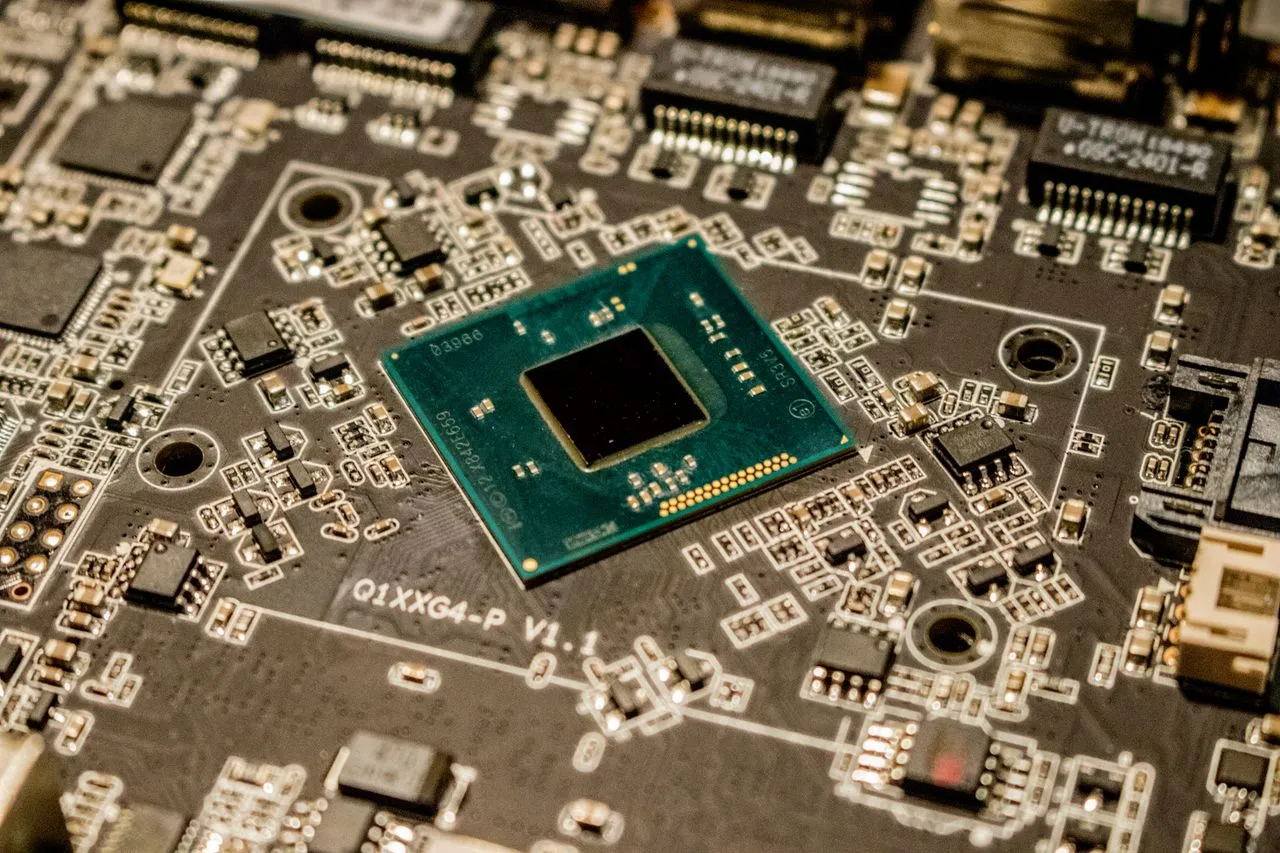
Microsoft says its new Maia 300 chip will deliver 40 percent more tokens per megawatt and become its primary inference system in 2027.
The third-generation in-house accelerator was announced Monday, and the company is not pitching raw speed with it. Every number it released is about efficiency. "We expect Maia 300 to deliver 40 percent more tokens per megawatt compared to leading GPU-based systems," said Scott Guthrie, executive vice president of Microsoft's cloud group. "And in a full 96-accelerator configuration, it delivers up to 7x the rack-scale token throughput of Maia 200."
Both figures are Microsoft's own, pre-production, and expressed as expectations rather than measurements. Maia 300 does not start running production workloads until 2027.
What Microsoft committed to
The scale statement matters more than the benchmark. "We will scale our Azure Maia family to multi-gigawatt deployments starting in 2027, making Maia the primary AI inference system for Microsoft products and services," Guthrie said.
That is a direct statement about reducing dependence on Nvidia and AMD silicon for inference inside Microsoft's own fleet. It is not a statement about Azure customers being moved onto Maia: the announcement as reported carries no pricing, no general availability date, and no third-party instance types.
Maia 300 is designed, in Guthrie's words, as "a complete AI system designed for the new types of AI workloads emerging today: Long-context reasoning, latency-sensitive conversational experiences, and sustained, multi-step agentic tasks." Those three workloads share a trait: they burn far more tokens per user request than a single chat completion does, which is exactly where a tokens-per-megawatt advantage compounds.
The architecture: chiplets on TSMC N2P
Maia 300 is built on TSMC's N2P process node and uses a chiplet architecture that separates compute, memory controller, and I/O functions. According to Microsoft's Azure hardware and infrastructure team, that split "increases the silicon area dedicated to compute performance and allows each function to use the technology best suited to its role."
That is the standard argument for disaggregating a die, and it is also the standard way to improve yields on a leading-edge node. No per-chip specifications accompanied the announcement as reported — no memory capacity, bandwidth, or power figures.
Maia 200 is already carrying production traffic
The predecessor sets the credibility baseline here. Maia 200 was announced in January and already runs production AI workloads across Microsoft, including Microsoft Copilot, GitHub Copilot, Microsoft Foundry, and Microsoft's own AI models. Guthrie called it "the best performing AI infrastructure in our fleet, measured in real world metrics for AI services."
Two generations shipped inside roughly a year is a fast cadence for custom silicon, and it is the part of this announcement that is verifiable today rather than in 2027. A 7x rack-scale claim measured against a chip that is demonstrably serving Copilot traffic is a more useful comparison than one measured against a lab configuration.
Why the silicon and the models are one story
Microsoft framed Maia 300 as infrastructure for its own model ambitions, not only as a cost line. "We have to work across the full stack, all the way down to the silicon," said Microsoft AI CEO Mustafa Suleyman. "At that scale we need a platform that we own, and that we co-design with our models. That's why running our Microsoft AI models on top of the Maia chip is a critical focus for our team."
The competitive context arrived the same day. Meta launched two models, Muse Wonder and Muse Wonder Full, available to Muse Code subscribers, with Wonder also reachable through the Meta Model API. Meta says these can rival leading models from OpenAI and Anthropic, including GPT-6 Astra, Claude Opus 5.5, and Claude Fable 5.1, pointing to results from internal testing on several industry benchmarks — the company's own claim, on its own evaluations, with no independent verification published. How they compare to Google's Gemini 4 Argon is still unclear.
Microsoft's position in that race is the gap Suleyman is describing: the company is trying to catch up with Google DeepMind, OpenAI, and Anthropic, and is betting that owning the inference hardware is part of how it closes the distance.
What this changes for anyone buying inference
Nothing immediately, and that is the honest read. The rollout date is 2027, the efficiency figures are vendor projections, and no third-party access was announced.
What it does change is the direction of the cost curve to plan against. If a hyperscaler can move the bulk of its own inference onto silicon it designed, the floor under inference pricing is set by its internal cost, not by what it pays Nvidia. That applies to Microsoft's own products first — Copilot and GitHub Copilot run on this fleet — and to Azure customers only if and when Maia capacity is offered externally.
What to watch
- Whether Microsoft publishes a tokens-per-megawatt methodology, or any per-chip specification, before the 2027 rollout. Right now the 40 percent figure cannot be independently checked.
- Whether Maia capacity is ever offered to Azure customers as an instance type, which is the only path by which these efficiency gains reach external buyers.
- Whether the 96-accelerator rack configuration is the deployment unit Microsoft actually builds, since the 7x claim is specific to that configuration.
- Whether Microsoft's own models ship on Maia, which is the test Suleyman set for his team.
More from DangMua