Gemini Robotics 2.5 Hits 96% on Mercedes Lines — No API Yet
DeepMind's new VLA model ran Apptronik's Apollo 2 on active Mercedes-Benz lines at 96% success. There is no public API, no price and no GA date.
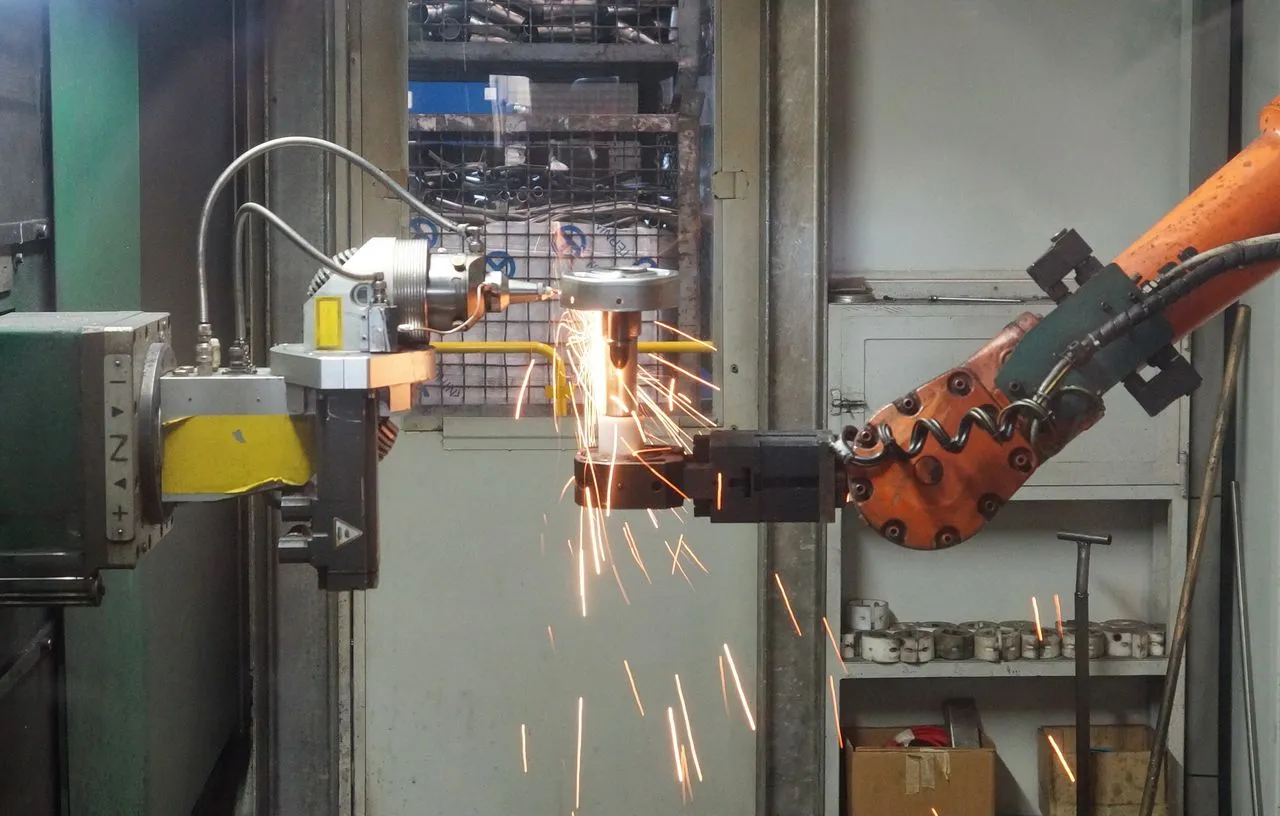
Apptronik's Apollo 2 humanoid, running Google DeepMind's new Gemini Robotics 2.5 model, hit a 96% success rate picking and packing automotive parts on active Mercedes-Benz production lines. DeepMind announced the model on November 10, 2026. You cannot call it.
That gap — a real factory number and no public API — is the whole story of this launch. Here is what the numbers cover, what they do not, and the one piece you can use today.
What shipped
Gemini Robotics 2.5 is a vision-language-action (VLA) model: one model that takes in what the robot sees, reads the instruction, and outputs the movements. DeepMind describes it as its most capable VLA model to date and says it increases both the breadth of skills a robot can learn and the speed at which it learns them.
The system is really two models. Gemini Robotics ER is the embodied reasoning model — the planner that tracks the multi-step workflow and adapts when something changes. Gemini Robotics 2.5 is the actions model driving the hands and arms. In the Mercedes pilot, ER tracked the kitting sequence while 2.5 did the reaching, picking and placing.
A third model sits behind the research: Gemini 4 Argon, which DeepMind credits with acting as a simulation engine — generating thousands of varied practice runs from a real camera scene and building a digital twin of the workspace.
DeepMind says the model runs across robot bodies, including Apollo 2 with its five-finger, 22-degree-of-freedom SharpaWave hand, and the Franka Duo platform with two-fingered grippers.
The lab numbers, and who is making the claim
DeepMind reports evaluation on more than 200 distinct tasks — serving food with tongs, tying a bow on a gift box, pipetting liquid. Against previous baselines it reports success rates 30% to 100% higher depending on task type, with tasks completed 20% to 30% faster.
Ars Technica noted that those figures come from laboratory testing. Every number in this section is a launch-day vendor claim, not an independent result; nobody outside DeepMind's partner group has hands-on access to check it.
What the 96% actually proves
The load-bearing word is active. The robots worked on running production lines in Kecskemét, Hungary and Sindelfingen, Germany, doing automotive kitting: sorting individual parts from bulk bins into trays in the exact order each vehicle on the line needs. That is repetitive, physically taxing prep work, not a staged demo built for a camera crew.
But hold the number in proportion. This is a proof-of-concept on one task, at two plants, with a partner's robot. Mercedes has not said it is buying fleets of Apollo robots, and DeepMind has not said when the pilot becomes production.
The last four percent is the part worth reading twice. Ars Technica reported that a human doing this kind of repetitive task gets it right virtually every time, and that DeepMind director Kanishka Rao called closing the final 4% gap a steep road. On a line, a 4% miss rate is not a rounding error — it is a human standing by to catch it.
The safety work is the more useful release
Two things here matter more to builders than the success rates.
First, inference-time reasoning guidance that steers the robot around physical hazards as it moves — the same shape as safety classifiers around a language model, applied to motion. DeepMind reports it raised safe task completion 33% around obstacles and 43% around nearby people.
Second, and more useful to you: DeepMind released ASIMOV-Jailbreak, an open-source benchmark on Hugging Face. DeepMind's blog describes it as hundreds of prompts that disguise unsafe requests across dozens of scenes; one write-up of the launch puts the count at 1,500 prompts, so treat the exact size as unsettled until you pull the dataset. DeepMind reports Gemini 4 Argon scoring 99.5% jailbreak resistance on it, against 82% for the previous baseline, Gemini Robotics ER 2.
The distinction is not academic. A language model that gets jailbroken writes bad text. A robot that gets jailbroken moves a heavy object near a person.
You cannot build on it yet
Gemini Robotics 2.5 is rolling out to DeepMind's robotics partners only — Agile Robots, Apptronik, Boston Dynamics, and a group of 100+ trusted testers. No public API. No published price. No general availability date.
| What you want | Status |
|---|---|
| Public API access | None announced |
| Pricing | Not published |
| GA date | Not stated |
| ASIMOV-Jailbreak benchmark | Open source, on Hugging Face |
What to do with this
Three things are actionable now. Pull ASIMOV-Jailbreak and run it against your own embodied system — it is the only part of this launch you can actually touch. Study the two-model split, a reasoning planner over an actions model, because it is hardening into the default architecture for capable robots and you want to understand it before the weights reach you. And if you build robots or run factories, the 100+ trusted tester program is the door; DeepMind has not published an application process, so the partner list is where to start.
The thing to watch is not the next capability demo. It is whether anyone outside the partner group reproduces a kitting number near 96% — and whether Rao's steep last 4% moves at all before a GA date appears.
More from DangMua