Android Adds Cloud Gemini Scam Checks to Google Messages
Google shipped two scam detectors on the same day: cloud Gemini intent analysis in Messages, and an on-device Gemma model built with GovTech Singapore.
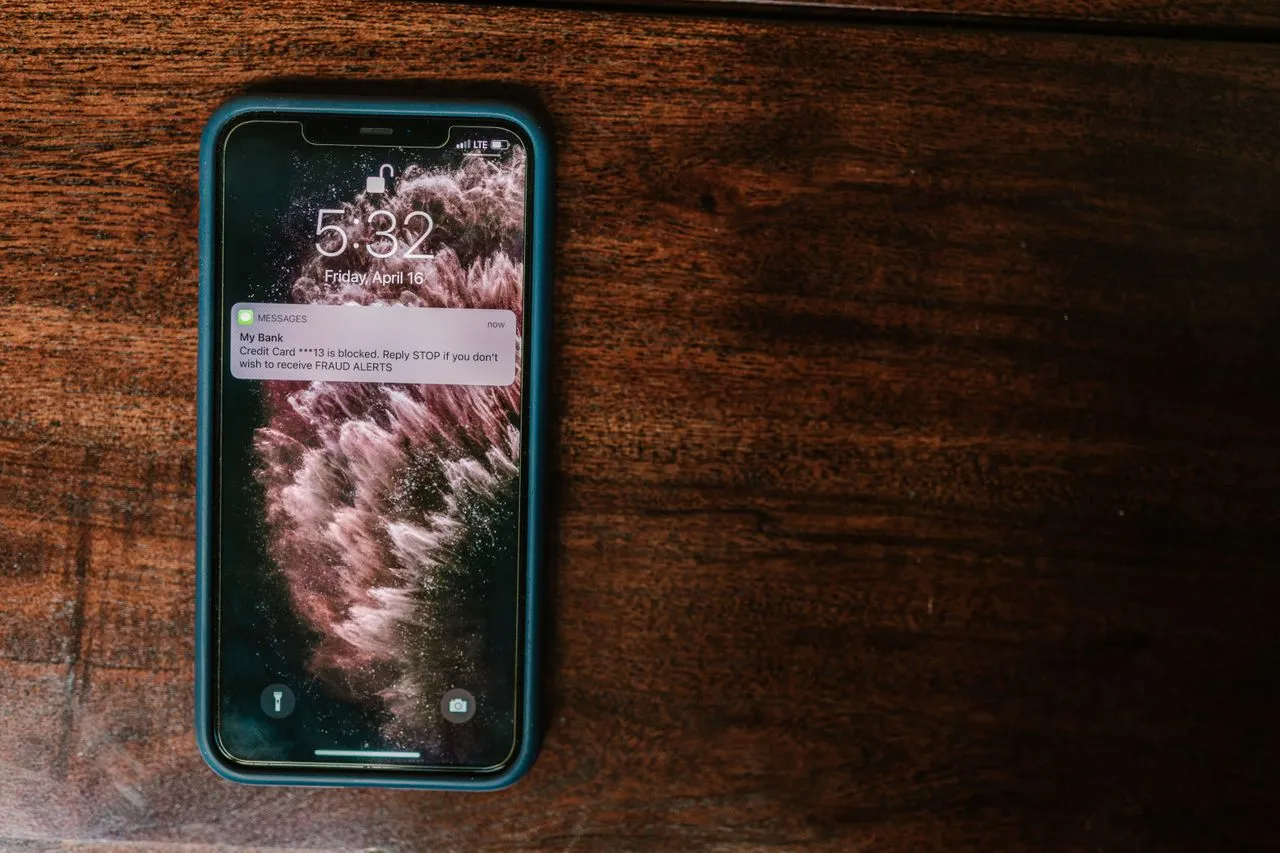
Google announced two scam-detection systems on October 14, and they run in opposite places. One sends unknown-sender chats to cloud Gemini models; the other never leaves the phone.
The split matters more than either announcement on its own, because it is the clearest statement yet of where Google thinks conversational fraud detection has to live.
What shipped in Google Messages
According to The Verge, "Android is introducing new scam defense features that aim to make it easier for users to evade mobile fraud, including bolstered protection in Google Messages and additional safeguarding tools."
The headline change is a setting called enhanced protection. It builds on the existing Scam Detection feature and "will be rolling out in the coming weeks that taps into cloud-based Gemini AI models to quickly evaluate a potential scammer's intentions in conversations with an unrecognized sender."
Two constraints are worth reading carefully. The mode is opt-in, so it changes nothing until a user turns it on. And it is scoped to unrecognized senders, not to every thread in the app.
Google's stated reason for reaching for the cloud is the shape of the attack. "Scammers often disguise their true motives behind slow-burn conversations," the company said in its update announcement, adding that the analysis "augments and extends our existing on-device detection, allowing us to identify novel and sophisticated attacks, actively uncovering and stopping abusers who try to hide their tracks."
On the privacy question, The Verge reports that "user data is encrypted during this AI analysis and 'processed in a secure dedicated space' that Google (and anyone else besides the user) can't access." That is Google's description of its own architecture, not a third-party audit result.
The parts that stay on the device
The same mode also runs local inference. It "uses on-device Gemini Nano AI to inspect real-time web signals in unfamiliar URLs sent to the user before they're opened to determine if the links are malicious," per The Verge.
So enhanced protection is not a move from on-device to cloud. It is a split: link inspection stays local, conversational intent analysis goes up.
Three further features landed in the same announcement: blocking apps from enabling call forwarding and notifying the user when something tries to, plus automatically concealing sensitive information while screen-sharing in Chrome and Android WebView.
Who gets it
The device list is the most concrete part of the news. Scam detection for chat notifications, which Google introduced on Pixel phones last year, "is also expanding to devices from Honor, Motorola, Oppo, OnePlus, Realme, Tecno, Vivo, Xiaomi, and more."
That is eight named brands beyond Pixel, plus an open-ended "and more." Google says it plans to bring the feature to "hundreds of millions of additional users later this year" — a plan figure, not a shipped count.
The same day, the opposite architecture
Google DeepMind also published a collaboration with the Government Technology Agency of Singapore (GovTech Singapore) on October 14, building a fine-tuned scam-detection model that runs entirely on the handset.
The case for it is in the loss figures DeepMind cites: scams "make up over half of Singapore's reported crimes, and account for more than S$4 billion in losses since 2019." The tactics have moved, too — "Such scams now account for up to 80% of all losses," referring to social engineering rather than simple phishing.
The technical approach is a fine-tune rather than a frontier model. "Google's lightweight Gemma model was fine-tuned on local scam conversations. These ranged from impersonations of public institutions, banks, and local figures, to trending regional schemes."
And the placement is the point: "Unlike traditional threat detection, which relies on server-side scanning of messages in the cloud, this model can process conversation data directly on-device." DeepMind goes further on access — "As the model runs entirely on-device, neither the Singapore Government nor Google, will be able to access users' conversations through its deployment."
How you run a classifier on a phone budget
Battery is the constraint that shapes the design. DeepMind describes a two-stage pipeline: "Stage 1: A lightweight, efficient classifier screens inbound messages, using minimal power, focused on catching potential threats. Stage 2: In-context analysis with our fine-tuned Gemma model, where we analyze a larger snapshot of the conversation to confirm a threat or discard a false alarm."
When stage two fires, the output is a nudge rather than a block: the model "triggers a real-time warning directly on the user's device advising them to pause and exercise caution before sharing sensitive information or funds."
The governance details are unusually specific for a launch post. Fine-tuning happened inside "GovTech Singapore's managed and maintained GCP environment, keeping training data isolated," and training "strictly excluded private or personally identifiable information, utilising anonymised datasets derived from scam reports and intelligence feeds."
Mark Chen, Director, Trust and Safety at GovTech Singapore, framed the tradeoff directly: "Fighting scams shouldn't mean sacrificing personal privacy. Working with Google DeepMind, we're bringing advanced AI protection directly onto citizens' devices."
What to watch
Neither system is finished shipping. The Messages mode is weeks out, and the Singapore rollout "will be carefully phased and developed in partnership with the Singapore Government," with the model reading on-device conversations only "with the user's consent."
The open question is whether the split holds. DeepMind presented the work at Singapore International Cyber Week (SICW 2026) as a template "for messaging platforms balancing user protection with end-to-end encryption" — and said it is "exploring the potential for similar technology to be deployed in other countries."
If that template travels, the interesting comparison will not be cloud versus on-device in the abstract. It will be whether a small locally fine-tuned model catches region-specific impersonation scams that a general-purpose cloud model reads as ordinary conversation.
More from DangMua