Vercel Now Supports MCP Apps Alongside ChatGPT Apps SDK
Vercel now supports MCP Apps on Next.js, the provider-agnostic standard for embedded agent UI that runs across Cursor, Claude.ai, and ChatGPT via iframes.
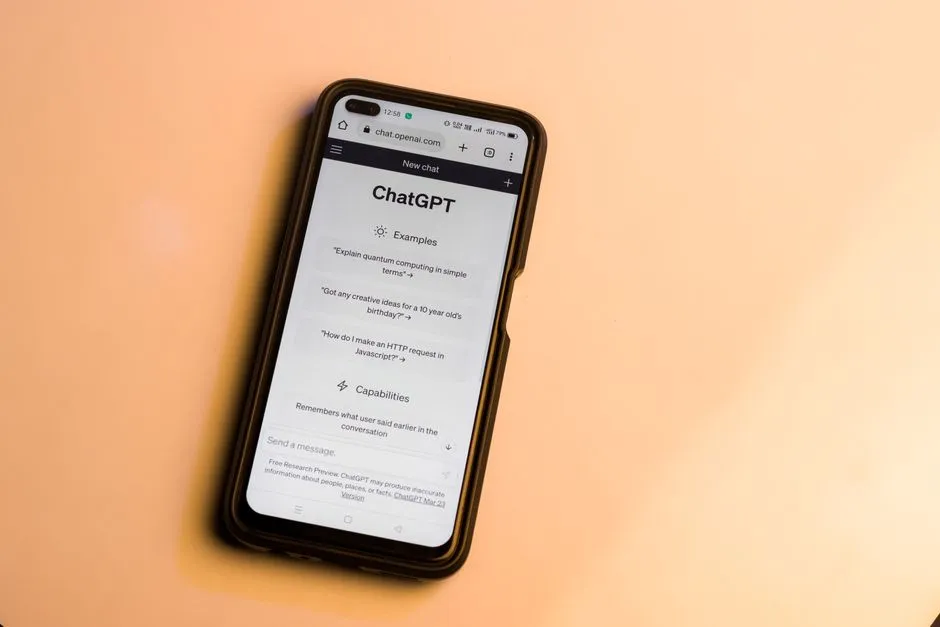
Vercel now supports MCP Apps on Next.js, giving developers a provider-agnostic way to embed agent UI across Cursor, Claude.ai, and ChatGPT. The company already supports OpenAI's competing ChatGPT Apps SDK on the same platform. Teams building agent interfaces on Vercel must now choose between two different runtime models, each built on a different piece of the Model Context Protocol ecosystem.
What Changed
According to Vercel's changelog, teams can now build and deploy MCP Apps on Vercel with full support for Next.js. MCP Apps are similar to ChatGPT apps, but Vercel describes them as a provider-agnostic open standard for embedded UIs. The company says these apps run inside iframes and communicate with any compatible host — including Cursor, Claude.ai, and ChatGPT — through a shared bridge.
The architecture relies on ui/* JSON-RPC calls sent over postMessage, according to Vercel. That approach lets a single UI component work across multiple hosts without a separate integration for each platform.
Vercel adds that pairing this standard with Next.js lets developers use Server-Side Rendering and React Server Components. The company calls the result “portable, high-performance agent interfaces” — a description worth treating as marketing framing rather than an independent benchmark.
Vercel's separate changelog post covers the ChatGPT side of that story. The company says developers can now build and deploy ChatGPT apps directly on Vercel, with what it calls full support for modern web frameworks. Those apps let a team integrate custom UI components and functionality inside ChatGPT itself, deployed and served by Vercel.
MCP Apps vs. ChatGPT Apps SDK
Vercel frames this contrast across two separate changelog posts. MCP Apps run inside a sandboxed iframe and reach any compatible host through the bridge described above.
ChatGPT apps built with Next.js run natively inside OpenAI's sandbox rather than in a nested iframe, Vercel says. That is the clearest technical split between the two standards.
| Aspect | MCP Apps | ChatGPT Apps SDK |
|---|---|---|
| Runtime | Sandboxed iframe | Native inside OpenAI's sandbox, no nested iframe |
| Host compatibility | Any compatible host — Cursor, Claude.ai, ChatGPT | ChatGPT only |
| Communication layer | ui/* JSON-RPC over postMessage | Model Context Protocol (MCP), per Vercel |
| Toolchain on Vercel | Next.js, SSR, React Server Components | Next.js (SSR, RSC), Apps SDK, mcp-handler |
Both standards ultimately route through MCP-related infrastructure, per Vercel's two posts, but the app boundary sits in a different place. That distinction — iframe versus native sandbox — is what teams need to weigh first.
Why the Runtime Model Matters
The runtime model changes what a team can promise its users. An iframe-based standard trades some integration depth for portability — the same component ships to multiple hosts without a rewrite. A natively hosted approach can avoid iframe-specific overhead, such as extra postMessage round-trips, but it ties the interface to a single host's sandbox.
The choice comes down to a few concrete questions. Which hosts do your actual users rely on today — just ChatGPT, or Cursor and Claude.ai too? Is cross-host portability worth more than the deeper integration a native sandbox can offer?
What This Means for Vercel Teams
Portability matters most for teams that already support several assistants in production. A single MCP Apps component removes the need to maintain host-specific versions of the same interface. That promise is still new, and the shared bridge remains untested at production scale.
The ChatGPT Apps SDK path leans on Vercel's existing deployment tooling. Vercel's changelog lists preview deployments, instant rollback, and a dev-to-production pipeline among the capabilities available when building ChatGPT apps with mcp-handler. That gives teams already standardized on Vercel a shorter path to production, even without cross-host portability.
That tradeoff points to a clear default. Teams shipping the same interface across Cursor, Claude.ai, and ChatGPT should lean toward MCP Apps despite the extra iframe layer. Teams building only for ChatGPT, and already deep into Vercel's deployment pipeline, gain less from that portability and can stay with the native SDK instead.
For platform teams already invested in Next.js and Vercel, the decision is less about capability and more about audience reach. Supporting MCP Apps costs an iframe boundary; supporting only the ChatGPT Apps SDK costs reach beyond OpenAI's own surface.
Neither Vercel post claims one approach will replace the other. Nothing here suggests MCP Apps is a community standard independent of Vercel's own implementation — it remains Vercel's platform support for an existing protocol pattern.
What to Watch
Three signals will show which standard gains ground on Vercel's platform in the months ahead.
- Whether teams building on Next.js pick MCP Apps' cross-host portability over the ChatGPT Apps SDK's native sandbox integration.
- Whether agent hosts beyond Cursor, Claude.ai, and ChatGPT add support for the ui/* JSON-RPC bridge Vercel describes.
- Whether Vercel publishes an MCP Apps example built with mcp-handler, alongside the existing ChatGPT Apps SDK documentation.
More from DangMua