Kimi K3.1 Pro Weights Are Open. Can You Actually Run It?
Moonshot opened Kimi K3.1 Pro's weights: 2.8T parameters, a 1.56 TB download, and 8+ B300-class GPUs to self-host. The hosted API is still the real route.
Moonshot published the weights for Kimi K3.1 Pro on 4 November, in a public, ungated Hugging Face repository. The download is about 1.56 TB. Those two facts together are the whole story for most teams.
The model itself is not new — K3.1 Pro launched on 23 October 2026 as an API and app model. What changed twelve days later is who can download, inspect, fine-tune and deploy it.
What is in the checkpoint
Per the release write-up, it is a natively multimodal agentic model with 2.8 trillion total parameters and 104 billion active per token: a mixture-of-experts design with 896 experts, 16 activated per token, across 93 layers, and a context window of 1,048,576 tokens. Twenty-four of those 93 layers swap full Gated MLA attention for sparse Gated DSA, aimed at long contexts.
The weights ship in MXFP4 with MXFP8 activations, produced through quantization-aware training — which is how a model this size becomes downloadable at all. The vision side is a 401-million-parameter MoonViT-V2 encoder. The 1.56 TB arrives as 96 safetensors shards, and there is no GGUF build at release, so the usual lightweight local route is closed for now.
Can you run it? Probably not
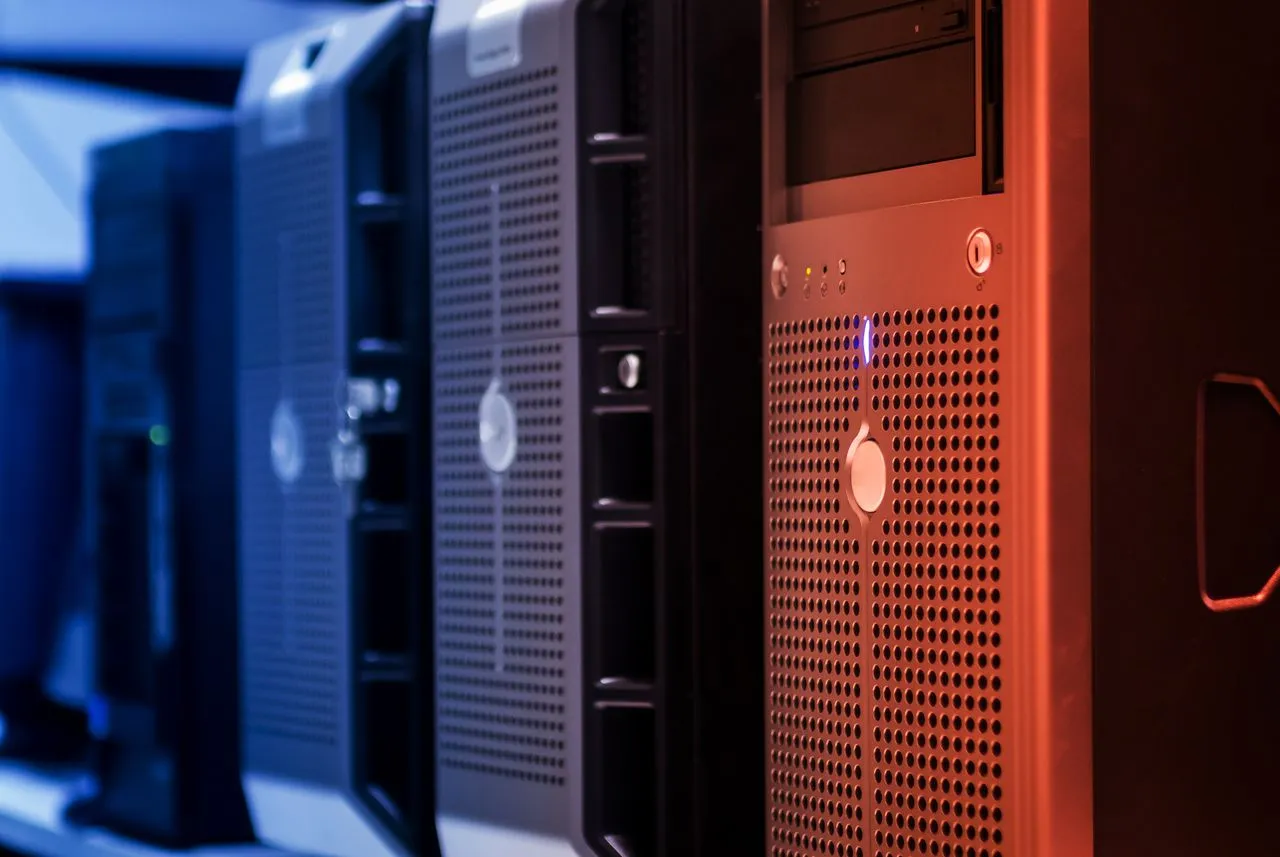
This is where the open-weights headline meets hardware. The write-up puts self-hosting at eight or more B300/GB300-class GPUs, with roughly 861 GB of VRAM at 2-bit precision and roughly 1,509 GB at 4-bit. Moonshot publishes deployment recipes for vLLM and SGLang and names TokenSpeed among recommended engines — that is where a serious evaluation starts, not a laptop.
For everyone else the hosted API stays the practical route, and its prices are public: kimi-k3.1-pro at $2 per million input tokens and $10 per million output, with cached input at $0.20 per million. A Highspeed variant is listed at $4 and $20, which Moonshot describes as 2–3 times faster — that speed figure is the vendor's claim, not a measured result.
The licence is the genuinely open part
The Kimi K3.1 Pro License reads MIT-style with two conditions, and both bite only at the top of the market: a model-as-a-service business with more than $20 million in revenue over 12 months needs a separate agreement, and products with more than 100 million monthly users or more than $20 million in monthly revenue must display the model's name. Below those lines it is free to use, modify and sell. For a startup fine-tuning on its own data, that is about as open as a frontier-class release gets.
Treat the benchmarks as claims
Moonshot's own figures put K3.1 Pro at 65.7% on Terminal-Bench 4.0, which in Moonshot's own comparison table sits just below Claude Opus 5.5 at 66.4% and above GPT-6 Astra at 58.2%. It also reports 94.2 on GPQA-Diamond, 92.1 on BrowseComp and 79.6 on OSWorld V2.1. Every one of those is a vendor number from the vendor's harness, and the write-up states that no independent tests existed at the time of writing.
One more unverified claim worth knowing about: Moonshot says it stripped cyber-related training data from this release and reports its own internal exploit benchmark falling from 90.5% to 81.0% after the filtering. That is the company measuring its own change. Nobody outside Moonshot has tested either the removal or the effect.
Don't confuse it with the other announcement
A day later, on 5 November, Moonshot launched Kimi Hosted Agents through its Kimi API Open Platform — a service that runs long-running and multi-agent workloads so you do not build the runtime yourself. It is a hosting service, not a model release, and the coverage notes that pricing, access tiers, model details and usage limits were not confirmed in the launch reporting. Anyone quoting a price for it today is inventing one.
So: two announcements, two days, two different decisions. The weights change what you can fine-tune. The hosted service, if the pricing lands somewhere sane, changes whether you build an agent runtime at all. Watch for the first independent Terminal-Bench reproduction — that is the number that turns this release from a claim into a choice.
More from DangMua