Beam Ships 501B Open Weights With 23B Active Per Token
Reflection AI released Beam under Apache 2.0 on October 16: 501B parameters, 23B active, a 1M-token context, and free for now on Vercel AI Gateway.
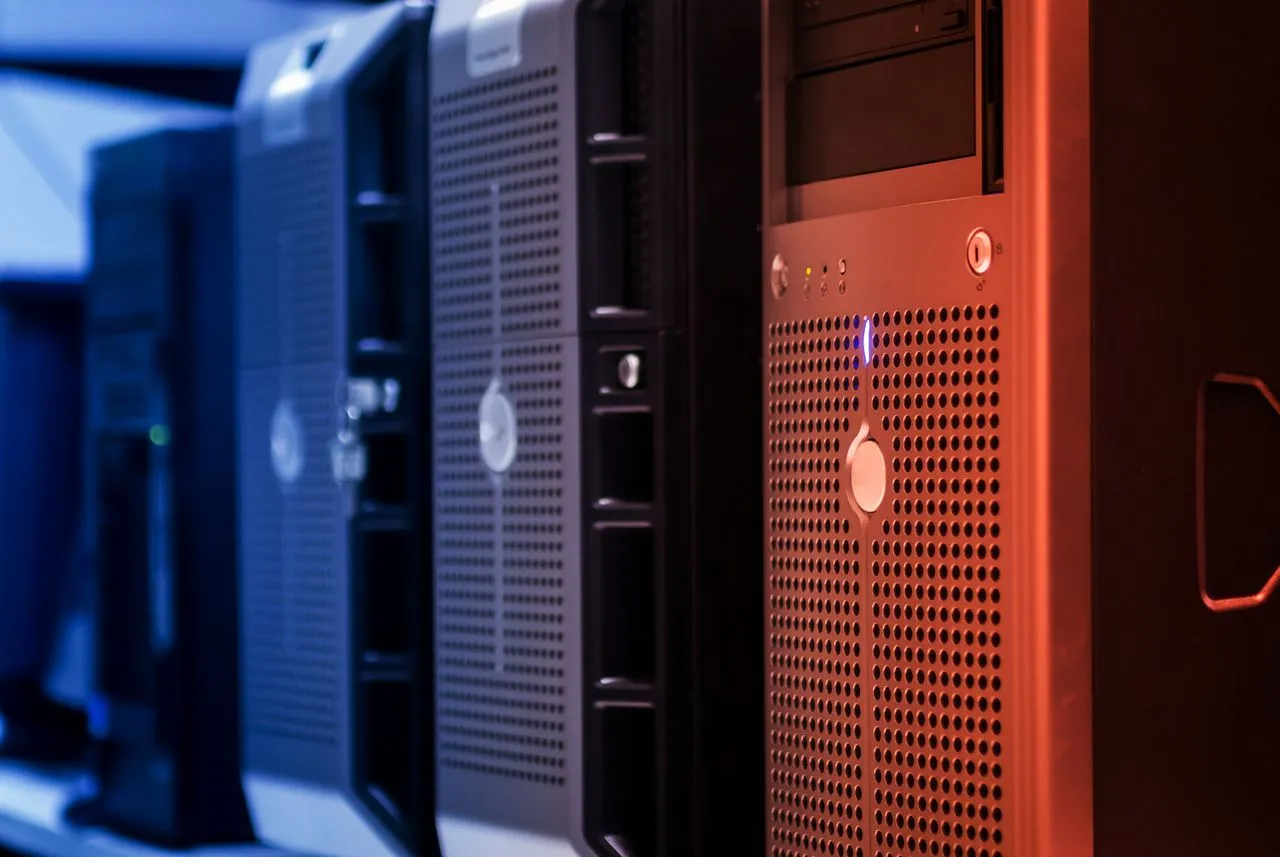
Reflection AI released Beam on October 16, a 501-billion-parameter open-weight model under Apache 2.0 that activates just 23B parameters per token. It landed on Vercel's AI Gateway the same day, free during the launch period.
What shipped
Beam is Reflection's first public model. Hugging Face describes it as "a mixture-of-experts (MoEs) model with 501B parameters (23B active per token), supports text as input, has a context window of 1M tokens, and is released under the Apache 2.0 license."
The model had been circulating anonymously before launch. Vercel's changelog notes it was "previously available in stealth as stealth/cat-jam."
The spec sheet is aimed squarely at coding agents: 52 layers, 256 experts per MoE layer with 8 routed per token, checkpoints in BF16, FP8 and NVFP4, tool calling with a dedicated grammar, and five reasoning levels — "low", "medium" (default), "high", "xhigh" and "max". Reasoning can persist across turns via a preserve_thinking flag. The model ships with its own Rust-based harness and day-0 support in transformers, vLLM and SGLang.
The sparsity trade, stated plainly
Sparse MoE models promise big-model quality at small-model speed, and Beam is explicit about what that costs. Hugging Face spells it out: "All 256 experts stay in memory, so deployment needs the memory of a 501B model but runs at the speed of a 23B one."
In practice, the BF16 checkpoint "is about 1 TB in safetensors format." The quantized path is the realistic one: NVFP4 "shrinks the 501B parameters in BF16 from 1 TB to ~280 GB."
That number carries a hardware condition. "Blackwell GPUs run NVFP4 natively but GPUs older than Blackwell like the H200 can't," the write-up says, pointing pre-Blackwell operators to the FP8 checkpoints instead.
What it takes to serve
| Configuration | Memory | Guidance as published |
|---|---|---|
| 2 × B200 | 360 GB | Holds the weights with "little room left for activations and the KV cache" |
| 4 × B200 | 720 GB | "Leaves plenty of room for long contexts and concurrent requests" |
| 2 × B300 | 288 GB each | Listed as a workable alternative |
| 16 × H200 | 78 GB per GPU | BF16 via expert parallelism; 8 GPUs would need 139 GB on a 141 GB card |
One constraint will bite anyone sizing a cluster from spare capacity: "The number of devices must divide the number of experts, 256." Six- and twelve-GPU pools do not qualify.
Teams without Blackwell silicon are told to skip self-hosting for now: "If you don't have Blackwell hardware, use Inference Providers (serverless) to test Reflection."
Long context without the usual cache bill
The more interesting engineering choice is how Beam holds a million tokens. Most of the stack uses sliding-window attention over the previous 512 tokens; every sixth layer and the last one attend to the full context, giving 43 sliding-window layers and 9 global ones.
The payoff is in the KV cache. Because "only the 9 global layers keep the whole sequence," the cache "grows by 36 KiB per token, roughly a sixth of the naive rate." At full context that is 36.08 GiB per sequence instead of 208 GiB. At 128K tokens it is 4.6 GiB against 26 GiB.
For agent workloads that pin long transcripts in context, weights — not cache — become the binding constraint. That inverts the usual sizing exercise.
Benchmarks, as supplied by the vendor
Hugging Face is careful about provenance here, publishing the numbers "as provided by the Reflection team." These are not independent evaluations.
On that basis, the BF16 checkpoint scores 81.6% on SWEBench Verified, 80.1% on Terminal Bench v2.1, 78.3% on SWEBench Multilingual, 76.5% on SWE Bench Pro v2-Hard and 66.1% on SWE Bench Pro v1. On reasoning sets it reports 97.7% on AIME 2026, 90.6% on GPQA Diamond, 88.3% on LiveCodeBench and 51.1% on HLE with tools, against 36.0% without. Tool-calling results include 80.8% on MCP Atlas and 76.8% on BrowseComp with context management.
The quantized checkpoints track closely in the same table: NVFP4 reports 80.7% on SWEBench Verified and 78.2% on Terminal Bench v2.1, FP8 reports 80.2% and 78.9%. Two low scores stand out and are worth noting precisely because the vendor published them: CriPT AA at 16.3% and an AA Omniscience index of 10.8 on a public split only.
The free window and its fine print
Vercel is the fastest route to trying it. Beam "is free to use for a limited time during the launch period when serviced by Reflection AI," with two access paths that behave differently when that window closes.
reflection/beam— "When the free period ends, the model slug will automatically transfer over to pricing with no downtime."reflection/beam-free— "The model will stop serving when the free offer ends."
Pick the first for anything that must keep running and the second for evaluation budgets that must not surprise you. Existing agents wire up through the CLI: "install the latest Vercel CLI and run setup: npx vercel ai-gateway setup," then select either slug in Claude Code, Codex or Cursor.
Vercel says the gateway "reflects provider pricing with no markup and does not charge a platform fee on inference, including on Bring Your Own Key (BYOK) requests" — the company's own characterisation, not a verified rate card. No end date for the free period has been published.
Is Beam worth your attention?
If you run coding agents on rented inference and your constraint is per-token cost, the free window is a cheap A/B test against whatever you use now — one CLI command, no migration.
If your constraint is data residency, the honest answer is that Beam is a Blackwell-era deployment. Four B200s is not a side project, and the Apache 2.0 licence only matters once you can afford to load the weights.
Two things to watch: the first independent benchmark reproductions, which Reflection is actively incentivising with "$10,000 Hub credits to the best projects that use Beam," and the date the free tier converts to paid.
More from DangMua